
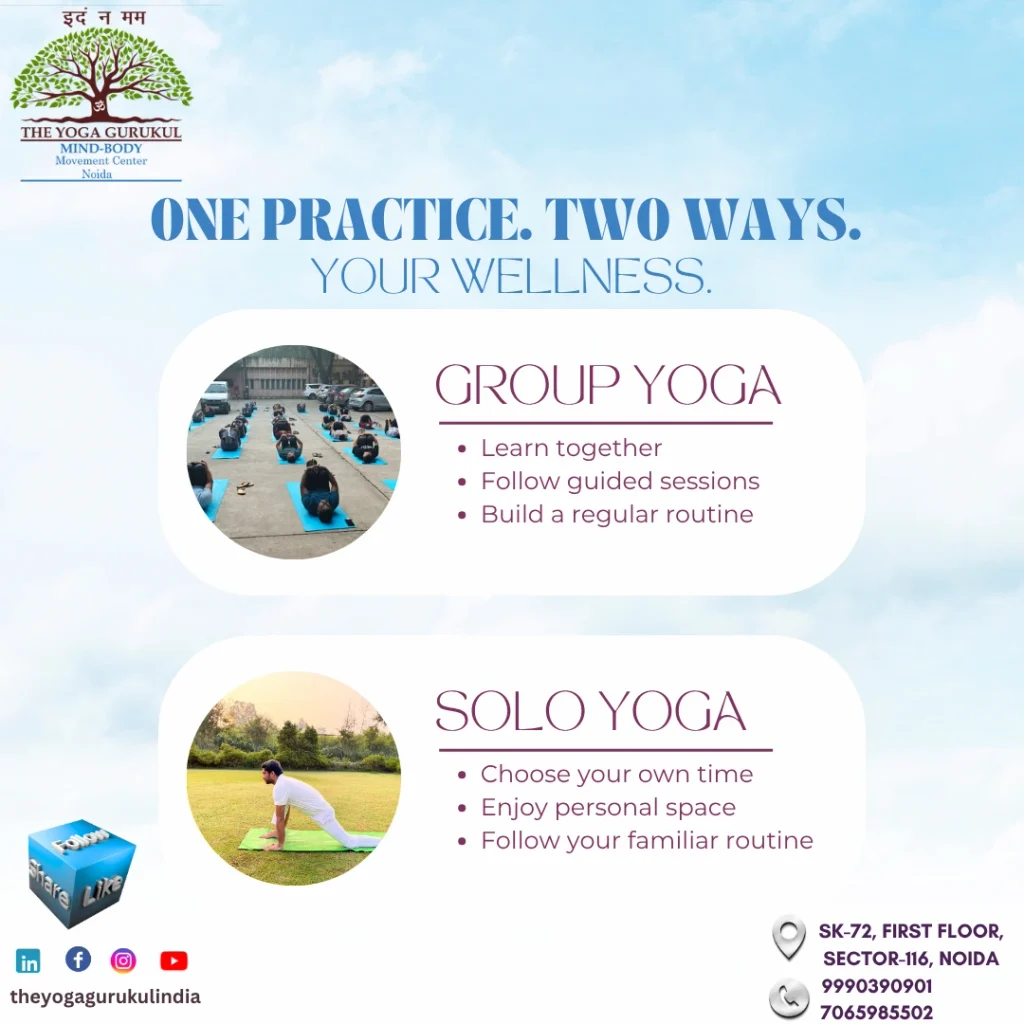
Yoga can be practised in different ways. Some people enjoy attending group yoga classes, while others prefer practising independently at home. Both approaches offer opportunities to develop a regular yoga routine, improve body awareness and make time for personal well-being.
But what is the difference between group yoga and practising yoga alone? And how can you decide which approach fits your lifestyle?
Let’s explore both options.
1. What Is Group Yoga Practice?
Group yoga is practised with other participants in a shared class, usually under the guidance of a yoga instructor.
Participants follow a planned session that may include warm-up movements, yoga postures, breathing exercises, relaxation and meditation.
For many people, attending a scheduled class creates a regular time and space for yoga. It can also provide an opportunity to learn alongside others with different levels of experience.
2. What Does Practising Yoga Alone Mean?
Practising yoga alone means following a yoga routine independently, often at home or in another comfortable space.
Some people follow a routine they have previously learnt from an instructor. Others use online sessions or guided yoga resources to support their practice.
An individual routine can offer flexibility in choosing the time, duration and surroundings. However, beginners may find it helpful to learn the fundamentals from a qualified instructor before attempting unfamiliar postures independently.
3. Group Yoga vs Practising Yoga Alone: Key Differences
A. Learning Environment
In group yoga, participants practise in a shared learning environment. They can follow the instructor’s guidance and observe how a session is structured.
When practising alone, the learning environment is more independent. It may suit people who are already familiar with their routine and prefer a quieter setting.
B. Routine and Consistency
Scheduled group sessions provide a fixed time for practice. This can help people who find it difficult to maintain a routine on their own.
Independent practice allows greater flexibility. You can choose a suitable time, but you need to organise your routine yourself.
C. Guidance and Feedback
A guided group session offers an opportunity to receive instructions and ask questions during class.
When practising alone, immediate feedback may not be available. Beginners should avoid forcing movements or attempting unfamiliar postures without proper guidance.
D. Social Interaction
Group yoga brings people together through a shared activity. Participants can enjoy practising in a community environment.
Practising alone offers more personal space and quiet time. Some people appreciate this opportunity to focus without the presence of others.
E. Flexibility
Independent yoga practice can fit around changing schedules because you decide when to practise.
Group classes follow a timetable, which may require planning ahead. In return, the scheduled session provides a dedicated time for yoga.
4. Benefits of Group Yoga Practice
Group yoga can be a useful option for people who enjoy learning in a shared environment.
Some features include:
- A planned session led by an instructor.
- A regular timetable for yoga practice.
- Opportunities to learn alongside other participants.
- A shared space for movement, breathing and relaxation.
- A chance to ask questions and receive guidance.
The experience depends on the class format, instructor and individual needs.
5. Benefits of Practising Yoga Alone
Independent practice also has its own advantages.
- Flexibility to choose a convenient time.
- Freedom to practise in a familiar environment.
- An opportunity to focus on personal goals.
- Greater control over the duration of a session.
- Space for quiet reflection and self-awareness.
A structured routine and appropriate guidance are especially useful when learning new techniques.
6. Can You Combine Group Yoga and Individual Practice?
Absolutely. These approaches do not have to be alternatives.
You may attend guided group classes and also practise familiar, appropriate movements at home.
For example, a person might attend a group session during the week and set aside a little time for gentle breathing, relaxation or previously learnt movements on other days.
The important thing is to choose a routine that is comfortable, sustainable and suited to your experience.
7. Which Yoga Practice Should You Choose?
There is no single answer that suits everyone.
Consider your schedule, experience and preferred learning environment.
- Choose group yoga if you enjoy scheduled classes, shared learning and instructor guidance.
- Choose individual practice if you prefer flexibility and already understand the routine you are following.
- Combine both if you enjoy guided learning as well as independent practice.
If you are new to yoga, consider starting with guidance from a qualified instructor and learning movements appropriate to your experience.
8. Explore Yoga Practice with The Yoga Gurukul
At The Yoga Gurukul, Noida, yoga is approached as a regular practice that can be adapted to different lifestyles.
Whether you are interested in group yoga sessions, personalised yoga guidance or online yoga sessions, explore the available programmes and find an option that suits your routine.
Explore more:
Frequently Asked Questions
1. Is group yoga suitable for beginners?
Group yoga can be suitable for beginners when the class is designed to accommodate their experience and provides appropriate instructor guidance.
2. Can I practise yoga alone at home?
Yes. You can practise familiar movements and routines at home. Beginners should learn the fundamentals and seek guidance before attempting unfamiliar postures.
3. Is group yoga better than practising alone?
Neither approach is universally better. The right option depends on your experience, preferences, schedule and need for guidance.
4. Can I attend group yoga classes and practise at home too?
Yes. Combining guided classes with familiar independent practice can help you build a routine that fits your lifestyle.
5. How often should I practise yoga?
This depends on your experience, comfort and schedule. Start with a manageable routine and adjust it gradually. Consistency and appropriate guidance matter more than forcing a demanding schedule.
Final Thoughts
Yoga is not about choosing between a group and an individual practice. It is about finding a way to make mindful movement and self-awareness a meaningful part of everyday life.
Whether you practise with others or enjoy a quiet session at home, choose a routine that allows you to learn comfortably and continue at your own pace.
Make time for yoga. Make space for yourself.
Pingback: Morning Yoga vs Evening Yoga: Which Is Better for Your Routine?